Talk to Expert
  • Course Duration :

    6 months (72 hours)

  • Course Fees :

    ₹ 1,25,000 + 18% GST

  • Schedule :

    Sundays, 9:30 AM – 12:30 PM

  • Course Eligibility :

    B.Tech/M.Sc./10+2+3 diploma holders

  • Campus Immersion (Optional):

    An optional one-day in-person session at IIT Delhi toward the end of the programme

Executive Programme in Semiconductor Manufacturing and Technology

As semiconductors become increasingly central to technologies spanning electric vehicles, artificial intelligence, high-performance computing, space applications and advanced electronics, understanding how semiconductor devices are designed, fabricated and optimized is becoming increasingly important.

The Executive Programme in Semiconductor Manufacturing and Technology, offered by the Continuing Education Programme (CEP), CEP IIT Delhi, provides working professionals with a structured understanding of semiconductor devices, fabrication processes, device physics, advanced applications and the commercial dynamics shaping the semiconductor industry.

Over six months, participants progress from semiconductor fundamentals to manufacturing processes such as lithography, doping and etching, before exploring device optimization, emerging applications and semiconductor market dynamics.

Why Choose IIT Delhi

NIRF Ranked #2

Ranked #2 in Engineering Category, recognised among India’s leading institutions for technical education, research excellence, and innovation.

QS Southern Asia Ranked #1

Ranked #1 in Southern Asia, reflecting CEP IIT Delhi’s academic excellence, research strength, and global reputation.

64,000+ Alumni Network

A global community of graduates driving innovation across technology, research, entrepreneurship, and industry.

60+ Years of Technology Leadership

Established in 1961, CEP IIT Delhi continues to drive innovation through research, industry collaboration, and technology advancement.

Learning Outcomes

Build Fluency in Semiconductor Devices & Technologies

Develop a clear understanding of semiconductor materials, energy bands, p-n junctions, diodes, transistors and their applications in modern electronic systems.

Understand Semiconductor Fabrication Processes

Gain insight into lithography, doping, etching, material modification and cleanroom practices that form the core of semiconductor manufacturing.

Analyse What Drives Device Performance

Explore carrier transport, junction behaviour, scaling, material selection, and thermal and power management to understand device performance and reliability.

Explore Semiconductor Applications

Understand how semiconductor technologies are applied across electric vehicles, AI and machine learning, high-performance computing, data centres and space applications.

Decode Global Semiconductor Supply Chains

Build an understanding of raw-material sourcing, manufacturing processes, market structure and supply-chain challenges across the semiconductor ecosystem.

Interpret Industry and Market Forces

Explore how emerging technologies, geopolitics, trade policies, investment and innovation influence the direction of the global semiconductor industry.

Programme Highlights


e-Certificate from CEP, IIT Delhi Earn an e-Certificate of Successful Completion from CEP, IIT Delhi upon meeting the prescribed requirements.
From Fundamentals to Semiconductor Manufacturing Understand the semiconductor journey from materials and devices to lithography, doping, etching, fabrication, and cleanroom practices.
Learn from IIT Delhi Faculty & Industry Experts Gain insights from faculty at IIT Delhi’s Optics & Photonics Centre, complemented by industry-led sessions.
Semiconductors Across High-Growth Applications Explore applications across EVs, data centres, high-performance computing, space, AI, and machine learning.
Device Performance & Optimisation Understand carrier transport, scaling, material selection, and thermal and power management in semiconductor devices.
Technology, Markets & Commercial Opportunity Examine market trends, supply chains, emerging technologies, geopolitics, trade policies, investment, and innovation.
Optional CEP IIT Delhi Campus Immersion Participate in a one-day in-person immersion for deeper interactions, discussions, and networking.
Learn with a Diverse Professional Cohort Engage with professionals from across India and international markets, bringing varied industry perspectives to the classroom.

Programme Structure

6 Months

A focused executive programme spread across six months.

72 Learning Hours

Structured learning covering five major semiconductor technology areas.

Live Online Learning

Attend online learning classes conducted through Zoom.

Sunday Schedule

Sessions are scheduled from 9:30 AM to 12:30 PM on Sundays.

Expert-Led Curriculum

Learn from CEP IIT Delhi faculty, complemented by guest lectures from industry leaders.

Optional Campus Immersion

An optional one-day in-person session at IIT Delhi is planned toward the end of the programme.

(Travel and accommodation are to be borne by the participants. CEP, IIT Delhi will not be responsible for the same.)

Curriculum Structure


Fundamentals of Semiconductor Devices and Technology
Semiconductor Materials Understand the basic properties of intrinsic and extrinsic semiconductors, including concepts like doping and charge carriers.
Energy Band Theory Explore energy bands and how they differentiate semiconductors from conductors and insulators.
P-N Junctions Learn about the formation of p-n junctions and their role in basic semiconductor devices like diodes.
Basic Semiconductor Devices Get an overview of simple devices such as diodes and transistors, focusing on their design and functionality.
Semiconductor Applications Discuss real-world applications of semiconductors, from simple electronics to more advanced systems like LEDs and solar cells.
Semiconductor Fabrication and Process Technologies
Introduction to Semiconductor Fabrication Gain insights into the semiconductor manufacturing process. Understand the importance of precision in fabrication.
Lithography Techniques in Fabrication Explore the various lithography methods used in semiconductor production. Learn how these techniques impact device resolution and performance.
Doping and Material Modification Understand the principles of doping and its effects on semiconductor properties. Examine methods for modifying material characteristics.
Etching Processes in Semiconductor Manufacturing Study the etching techniques essential for device fabrication. Learn the differences between wet and dry etching methods.
Cleanroom Practices and Environmental Control Delve into the importance of cleanroom environments. Understand the protocols and technologies used to maintain cleanliness in semiconductor fabs.
Device Physics and Performance Optimization
Carrier Transport Mechanisms Examine drift, diffusion, and recombination processes and their impact on device operation.
Junction Behavior Analyze the behavior of p-n junctions, including electric fields, depletion regions, and forward/reverse bias conditions.
Scaling and Miniaturization Understand the effects of device scaling on performance and efficiency, particularly in modern transistors.
Material Selection Explore the role of different semiconductor materials (e.g., silicon, gallium nitride) in optimizing device performance.
Thermal and Power Management Learn strategies to manage heat and power in high-performance semiconductor devices for improved reliability.
Advanced Applications of Semiconductor Technology
Semiconductors in Electric Vehicles Explore how semiconductors are transforming the electric vehicle industry. Understand their role in power management and control systems.
Data Centers and High-Performance Computing Delve into the impact of semiconductor technology on data centers. Learn about energy efficiency and processing capabilities.
Semiconductors in Space Applications Study the unique challenges of semiconductor use in space. Explore materials and technologies designed for extreme environments.
Artificial Intelligence and Machine Learning Examine how semiconductors enable advancements in AI. Learn about specialized chips for neural networks and deep learning.
Entertainment Technologies: Gaming and Beyond Explore the role of semiconductors in the entertainment industry. Understand their applications in gaming, VR, and media streaming.
Semiconductor Market Dynamics and Commercial Opportunities
Global Semiconductor Market Overview Understand the structure and size of the global semiconductor market, including major players, key regions, and market segments.
Supply Chain Dynamics and Challenges Explore the semiconductor supply chain, including raw material sourcing, manufacturing processes, and recent disruptions like the global chip shortage.
Emerging Technologies and Growth Opportunities Identify new trends in semiconductor technology, such as AI, 5G, and automotive applications, and explore potential commercial opportunities.
Geopolitics and Semiconductor Trade Policies Analyze the impact of geopolitical factors on the semiconductor industry, including trade wars, export controls, and government policies.
Investment and Innovation in Semiconductor Startups Learn about venture capital, funding strategies, and the role of innovation in driving growth within the semiconductor ecosystem.

When learning moves beyond the classroom

The CEP Delhi campus immersion enabled participants of the Executive Programme in Semiconductor Manufacturing and Technology to experience cutting-edge labs, faculty-led insights, and peer learning that shapes industry-ready expertise.

Skills You Will Learn

Semiconductor Device Expertise
Chip Fabrication Processes
AI & EV Chip Applications
Device Scaling & Optimisation
Semiconductor Market Intelligence
Industry Trend Analysis

Industry Insights

7,000+

7,000+ Semiconductor Manufacturing Jobs Are Live in India

Source: LinkedIn
₹7L–₹11L

₹7L–₹11L for Semiconductor System Integration Roles

Source: Glassdoor
3,000

3,000 New Jobs Targeted in Advanced Semiconductor Manufacturing

Source: Government of India
40+

40+ Semiconductor & Electronics Startups Showcased in 2026

Source: SEMI

Fee Structure

Particulars Amount (₹)
Programme Fees ₹ 1,25,000
GST @ 18% ₹ 22,500
Total Fees ₹ 1,47,500
Note:

All fees should be submitted in the IITD CEP account only, and the details will be shared post-selection.

The receipt will be issued by the IIT Delhi CEP account for your records.

Easy EMI options available.

Loan and EMI Options are services offered by Teamlease Edtech. CEP IIT Delhi is not responsible for the same.

Withdrawl & Refund From Programme

Candidates can withdraw within 15 days from the programme start date. A total of 80% of the total fee received will be refunded. However, the applicable tax amount paid will not be refunded on the paid amount.

Candidates withdrawing after 15 days from the start of the programme session will not be eligible for any refund.

Easy EMI options available.

If you wish to withdraw from the programme, you must email cepaccounts@admin.iitd.ac.in and cepdelhi@digivarsity.com, stating your intent to withdraw. The refund, if applicable, will be processed within 30 working days from the date of receiving the withdrawal request.

Fee Schedule

Installment Installment Date Amount (₹)
I Within 3 days of offer roll out ₹ 60,000+GST
II On or before 25th January, 2026 ₹ 65,000+GST
Total fees – ₹ 1,25,000+GST [No cost EMI available]
Note:

GST @ 18% will be charged extra in addition to the fee.

Loan and EMI Options are services offered by Teamlease Edtech. CEP IIT Delhi is not responsible for the same.

Programme Certificate

Certificate of Completion

Awarded with a minimum of 40% attendance and over 50% marks.

Mba International Business

Certificate of Participation

Awarded with at least 40% attendance and below 50% marks.

Mba International Business
  • - The above e-certificate is for illustrative purposes only and the format of the e-certificate may be changed at the discretion of IIT Delhi.
  • - Only e-certificate will be provided and it will be issued by CEP, IIT Delhi.
  • - The organizing department of this programme is the Optics & Photonics Center, IIT Delhi.

Programme Co-ordinator

Prof. A. Aadhi
Assistant Professor
OPTICS AND PHOTONICS CENTRE (OPC), INDIAN INSTITUTE OF TECHNOLOGY DELHI, NEW DELHI.

Prof. A. Aadhi is currently an Assistant Professor at the Optics and Photonics Centre, Indian Institute of Technology Delhi. His research expertise includes silicon technology, integrated photonics, neuromorphic processors, nonlinear optics, and structured light beam generation. He earned his PhD in 2016 from IIT Gandhinagar and the Physical Research Laboratory. He is also currently a visiting scientist at Queen’s University, Canada. From 2017 to 2025, he was a postdoctoral researcher at several leading institutes, including the Institut National de la Recherche Scientifique (INRS), Canada; Queen’s University, Canada; and the Singapore University of Technology and Design (SUTD), Singapore. He has published more than 50 research articles in high-impact journals such as Nature, Nature Communications, Nature Reviews Physics, Optica, Advanced Science, Laser & Photonics Reviews, and Optics Letters, as well as more than 50 conference proceedings. Prof. Aadhi holds six international patents and several Editor’s Pick articles in leading journals. He has received several national and international awards, fellowships, and has delivered numerous invited talks at major international optics and photonics conferences, including CLEO, SPIE Photonic West, IEEE, Europhotonics, and Photonics North.

Prof. Dheeraj
Assistant Professor

OPTICS AND PHOTONICS CENTRE (OPC), INDIAN INSTITUTE OF TECHNOLOGY DELHI, NEW DELHI. Dheeraj Pratap is an Assistant Professor at the Optics and Photonics Centre (OPC) of the Indian Institute of Technology (IIT) Delhi. He obtained his PhD degree in metamaterials from the IIT Kanpur in 2016.
Later, he was a postdoctoral researcher in GRESPI at the University of Reims Champagne-Ardenne, France. For a short time, he worked as a project scientist at the IIT Kanpur and then as an Assistant Professor at the Veermata Jijabai Technological Institute (VJTI) Mumbai. Before joining the OPC, he was a CSIR-Nehru Science Postdoctoral Fellow at the CSIR-Central Scientific Instruments Organization (CSIO) in Chandigarh. His research interests include photonic metamaterials, metasurfaces, plasmonics, and photothermal effects. He has published several research articles in national and international journals of repute and has a few patents.

 Prof. Deepak Jain
Assistant Professor
OPTICS AND PHOTONICS CENTRE (OPC), INDIAN INSTITUTE OF TECHNOLOGY DELHI, NEW DELHI.

Deepak Jain is an Assistant Professor at the Optics & Photonics Center (OPC) of the Indian Institute of Technology Delhi. Before this, he was an Assistant Professor at the Electrical Engineering department of the Indian Institute of Technology Bombay, a University Research Fellow at the University of Sydney, and a Hans Christian Oersted and Marie-Curie Research Fellow at the Technical University of Denmark. He obtained his Ph.D. from the Optoelectronics Research Center, University of Southampton, UK, and his MTech from the Indian Institute of Technology Kanpur. His area of interest revolves around semiconductor, optical fibers, and technology transformation from academia to industry. He is a co-founder of DeepLase Technologies and BrahmaSens Technologies, Delhi-based laser and sensor company respectively, SpecPhotonics, an Adelaide-based specialty optical fiber company, and was an early co-founder of NORBLIS, a Danish broadband laser company. He has more than 70 publications, including 30 journal publications and several invited conference papers. He is also a senior member of Optica and IEEE
Programme Co-coordinator

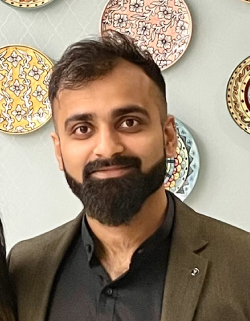
 Prof. Awanish Pandey
PROGRAMME CO-CORDINATOR
Assistant Professor
OPTICS AND PHOTONICS CENTRE, INDIAN INSTITUTE OF TECHNOLOGY DELHI, NEW DELHI.

Prof. Awanish Pandey is an Assistant Professor at the Optics and Photonics Centre, IIT Delhi. He has nearly a decade of experience in semiconductors technology, having worked with leading semiconductor foundries like imec, Belgium, and renowned research facilities such as CERN in Geneva, Switzerland. He obtained his Ph.D. from the Indian Institute of Science, Bangalore in 2019. Primarily, his research works revolves around manipulating the flow of photons in nanophotonic structures made of semiconductors such as Silicon. Currently, his research group is focusing on developing ultra-high-speed integrated photonic links and systems for 6G communication. Additionally, he plays a key role in the National Quantum Mission (NQM), contributing to the development of India’s first photonic quantum processor.

 Prof. Deepak Jain
Assistant Professor
OPTICS AND PHOTONICS CENTRE (OPC), INDIAN INSTITUTE OF TECHNOLOGY DELHI, NEW DELHI.

Deepak Jain is an Assistant Professor at the Optics & Photonics Center (OPC) of the Indian Institute of Technology Delhi. Before this, he was an Assistant Professor at the Electrical Engineering department of the Indian Institute of Technology Bombay, a University Research Fellow at the University of Sydney, and a Hans Christian Oersted and Marie-Curie Research Fellow at the Technical University of Denmark. He obtained his Ph.D. from the Optoelectronics Research Center, University of Southampton, UK, and his MTech from the Indian Institute of Technology Kanpur. His area of interest revolves around semiconductor, optical fibers, and technology transformation from academia to industry. He is a co-founder of DeepLase Technologies and BrahmaSens Technologies, Delhi-based laser and sensor company respectively, SpecPhotonics, an Adelaide-based specialty optical fiber company, and was an early co-founder of NORBLIS, a Danish broadband laser company. He has more than 70 publications, including 30 journal publications and several invited conference papers. He is also a senior member of Optica and IEEE
Student Testimonials

Frequently Asked Questions

The semiconductor manufacturing programme covers semiconductor fundamentals, device physics, fabrication processes, performance optimisation, and advanced applications. Participants also explore global supply chains and emerging industry trends.

The semiconductor course is designed for professionals seeking expertise in semiconductor technologies. Candidates with a B.Tech, M.Sc., or 10+2+3 diploma qualification are eligible to apply.

Unlike semiconductor manufacturing courses focused on specific processes, IIT Delhi's programme covers the wider semiconductor ecosystem, from device fundamentals and fabrication to industrial applications, guided by IIT Delhi faculty and industry experts.

The programme offers an optional one-day campus immersion at IIT Delhi. Travel and accommodation expenses must be borne by participants. CEP, IIT Delhi will not be responsible for these arrangements or expenses.

Unlike specialised semiconductor chip design courses, this programme focuses on semiconductor device fundamentals, manufacturing processes, fabrication technologies, and device performance rather than advanced VLSI or ASIC design.

The semiconductor technology course explores applications in EVs, AI, data centres, high-performance computing, and space technologies, alongside semiconductor supply chains and emerging industry trends.