
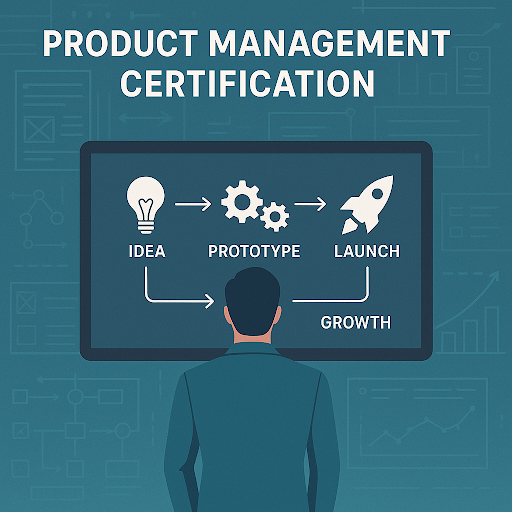
“The best product managers don’t wait for permission — they start solving problems where they are.â€
Product management has become one of the most exciting and high-growth career paths across technology, e-commerce, fintech, and digital products. Many working professionals — from engineering, marketing, operations, and even customer support — are now shifting into product roles to shape solutions, influence strategy, and drive business outcomes.
However, the challenge most people face is simple: How do you transition while working full-time? The good news is that you don’t need to resign or go back to college. With the right approach, you can learn product skills, gain real-world exposure, and build a strong portfolio — all alongside your current job.
This guide shares smart learning strategies to help you upskill for a successful product career, without disrupting your work life.
Table of Contents
- Identify Transferable Skills You Already Have
- Choose the Right Product Management Certification While Working
- Explore Flexible Product Management Courses Online
- Learn by Doing: Build Experience Where You Are
- Networking & Community Learning for Continuous Growth
- Track Your Progress & Prepare for Interviews
- Conclusion
- FAQs
Identify Transferable Skills You Already Have
You may already possess many skills required for product management — even if you’ve never worked with a product team before. Product managers come from diverse backgrounds, so draw from what you already do:
Examples of transferable skills:
- Project coordination and stakeholder communication
- Understanding customer needs and behavior
- Data analysis and decision-making
- Problem-solving and process improvement
- Technical familiarity or domain expertise
Recognizing your strengths allows you to position yourself as “PM-ready†early in the journey. Start aligning your current responsibilities with product tasks such as feature prioritization, metrics tracking, or customer feedback analysis.
Choose the Right Product Management Certification While Working
A widely recognized product management certification can give you credibility and structure in your learning journey. It signals to recruiters that you understand core concepts like product lifecycle, agile methodologies, MVP development, and product strategy.
How to choose the right certification as a working professional:
- Flexible schedules — weekend or self-paced sessions
- Practical curriculum — real case studies, product tools exposure
- Mentorship & career support — important for beginners
- Industry recognition — helps during hiring conversations
Opt for programs that offer portfolio building and mock interviews. It’s not just about theory — employers want to see execution and ownership.
Explore Flexible Product Management Courses Online
If you're just starting or want to test the waters, enrolling in beginner-friendly product management courses online is a great first step. They offer convenience, accessibility, and a wide range of focus areas — from user experience to product analytics.
Types of course paths to explore:
- Short-term workshops
- Bootcamps with live classes
- Product management programme with capstone projects
- Micro-learning modules for busy schedules
Online learning allows you to progress at your own pace while applying lessons directly at your current workplace.
Learn by Doing: Build Experience Where You Are
The fastest path to becoming a product manager? Hands-on experience.
Here’s how you can practice PM responsibilities in your current role:
- Shadow or assist a product manager on small tasks
- Volunteer to manage a feature improvement or internal tool
- Review product metrics and customer feedback
- Propose new ideas backed by data insights
- Take ownership of documenting requirements or user stories
In parallel, start a small side product — a mobile app idea, browser extension, or even a micro-SaaS solution. This helps you understand the full product lifecycle end-to-end.
You can then turn these into case studies for your PM portfolio — a crucial asset when applying for roles.
Networking & Community Learning for Continuous Growth
Product management is a highly collaborative field, and networking accelerates learning. Surround yourself with people who can guide you and provide feedback.
Places to network:
- LinkedIn product communities
- Slack/Discord PM groups
- Local meetups or product talks
- Hackathons and product challenges
Talking to real product managers helps you:
- Understand industry expectations
- Gain interview insights
- Stay updated on product trends and tools
- Find referral opportunities
Mentorship — even informal — can significantly shorten your transition timeline.
Track Your Progress & Prepare for Interviews
Transitioning into product management takes consistent effort. Track how your skills grow in areas like:
- Product thinking and customer empathy
- Analytics and decision frameworks
- Stakeholder management
- Agile project execution
- Product roadmap and prioritization
Once confident, prepare for interview structures such as:
- Product case studies
- Product design questions
- Metrics and business impact assessment
- Strategy frameworks (AARRR, Kano, etc.)
Your learning journey should show clear progress from “interest†to “impact.â€
Conclusion
Breaking into product management doesn’t require quitting your job or starting from scratch. With targeted upskilling, real-world practice, and the right product management courses or certifications, any working professional can pivot into a rewarding product role.
The key is consistency — learning a little each day, experimenting with tools and frameworks, and building your network within the product ecosystem. Your job today can be the stepping stone toward your future product career.