
“When Machines Begin to Learn, Humans Must Learn Deeper.â€
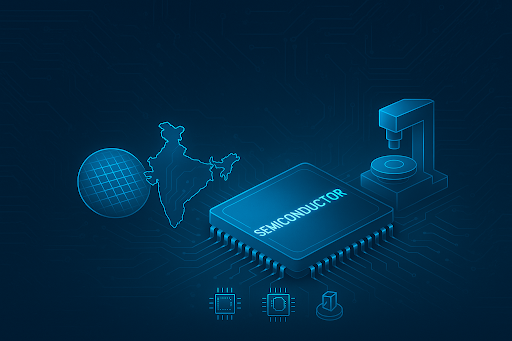
India is entering a new technological era — one defined not by code, but by circuits. The Semiconductor Manufacturing Programme stands at the heart of this transformation, creating a new generation of engineers who design, fabricate, and optimise the chips that power our digital world.
As an IIT alumna who has spent over a decade working in semiconductor manufacturing and process design, I’ve witnessed how rapidly this industry is evolving. From wafer fabrication to lithography, from cleanroom operations to nanoscale design — semiconductor engineering today demands precision, interdisciplinary skill, and a deep understanding of systems that are both microscopic and monumental.
Table of Contents
- Why Semiconductor Manufacturing Matters Now More Than Ever
- Executive Education: A New Model of Learning
- Developing Technical Mastery of Semiconductor
- Careers Opportunities: A Future of Innovation and Stability
- The Broader Vision: From Learning to Nation-Building
- FAQs
Why Semiconductor Manufacturing Matters Now More Than Ever
Every field — from telecommunications to renewable energy, defence, and electronics — depends on semiconductor innovation. As the world faces supply-chain shifts and rising demand for self-reliance, India’s semiconductor capacity is becoming strategically vital.
The Semiconductor Manufacturing Programme is designed to meet this national need. It develops professionals capable of handling end-to-end semiconductor processes — including material science, fabrication, assembly, and testing. Learners gain practical exposure to cleanroom environments, process control tools, and wafer-level characterisation systems, ensuring they graduate industry-ready.
âš™ï¸ Takeaway: Semiconductors are not just components — they are the foundation of every digital and energy system that defines modern civilisation.
Executive Education: A New Model of Learning
The industry today demands more than technical skill; it demands leadership that understands both engineering and enterprise. That’s where Executive Education in Semiconductor Technology plays a crucial role.
These programmes are curated for professionals already working in manufacturing, design, or R&D roles who wish to transition into strategic or managerial positions. Participants learn to interpret fabrication data, manage process optimisation, and implement sustainable manufacturing practices.
Institutions like IITs and national research centres now offer structured pathways for executives to upgrade their technical and leadership capabilities in line with global semiconductor standards.
🎓 Insight: The semiconductor revolution is being driven not only by engineers at the wafer bench, but also by leaders who can connect technical precision with industrial vision.
Developing Technical Mastery of Semiconductor
For early-career professionals and students, a semiconductor industry certification provides the first major step toward entering this highly specialised field.
These certifications emphasise core domains such as:
- Wafer Fabrication and Lithography – Understanding deposition, etching, and pattern transfer.
- Materials and Process Engineering – Working with silicon wafers, thin films, and dopant technologies.
- Testing and Packaging – Learning assembly processes, yield optimisation, and reliability analysis.
- Cleanroom Protocols and ESD Safety – Mastering the controlled environments required for device fabrication.
Completion of such certifications signals readiness for both academic research and industrial production roles — bridging the skill gap that has long constrained India’s manufacturing growth.
🧩 Key Point: Industry certifications make engineers deployment-ready — ensuring they can transition seamlessly from classrooms to fabs.
Careers Opportunities: A Future of Innovation and Stability
The surge in fabrication projects across India has opened new opportunities for engineers pursuing careers in semiconductor manufacturing. Demand now spans across process design, quality control, tool maintenance, materials analysis, and yield enhancement.
Typical career tracks include:
- Process Engineer: Overseeing photolithography, etching, and deposition cycles.
- Equipment Engineer: Managing automation, calibration, and system reliability.
- Product Development Specialist: Bridging design and production to ensure performance consistency.
- Quality and Reliability Engineer: Evaluating long-term stability and process precision.
Manufacturers and research units in regions such as Bengaluru, Gujarat, and Noida are actively recruiting skilled professionals — with strong incentives for those who hold advanced certifications or MTech-level degrees in microelectronics or materials engineering.
💼 Industry Insight: With new fabs being established under national initiatives, semiconductor professionals are now among the most sought-after engineers in India’s industrial ecosystem.
The Broader Vision: From Learning to Nation-Building
This programme is more than an academic initiative — it is a cornerstone of India’s self-reliant technology mission. Aligning education with national manufacturing priorities ensures that every graduate contributes directly to the country’s innovation ecosystem.
Beyond technical training, the programme nurtures critical thinking, ethics, and sustainability awareness — essential qualities in a field that defines both technological capability and national resilience.
🌠Reflection: Semiconductor education is not about producing components; it’s about building confidence — in people, in processes, and in a nation ready to lead the future of technology.