
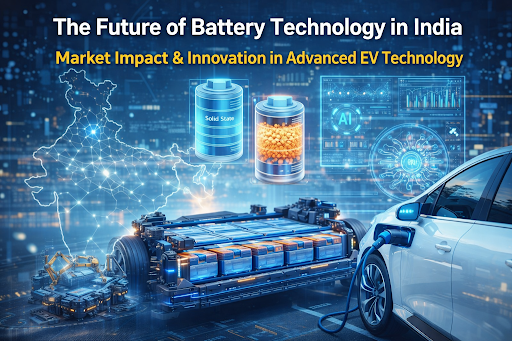
India’s electric mobility landscape is entering a transformative decade where battery innovation will determine speed, scale, and strategic direction. As vehicle platforms evolve and electrification moves deeper into commercial and high-load applications, the battery has become the defining element of performance, cost, and long-term competitiveness.
Written from the lens of a Senior Field Expert with over ten years of engineering and leadership experience across EV powertrains, battery systems, and large-scale electrification projects, this analysis explores how India’s battery ecosystem is shifting—from chemistry and manufacturing to energy security and innovation pathways.
Table of Contents
- India’s Battery Evolution: From Affordability to Innovation Leadership
- Next-Generation Battery Chemistries Redefining India’s Mobility Future
- Building India’s Domestic Cell Manufacturing & Supply Chain Backbone
- Thermal Management, Battery Intelligence & Predictive Safety Systems
- Market Impact: How Battery Innovation Will Transform India’s EV Ecosystem
- Key Takeaways
- FAQs
India’s Battery Evolution: From Affordability to Innovation Leadership
India’s first wave of EV adoption focused on affordability and mass-market penetration,
particularly in the two-wheeler and three-wheeler segments. However, the ecosystem has
matured rapidly. The nation is now prioritising advanced engineering, localisation of
critical components, and research-driven competitiveness.
Key drivers behind this shift include:
- Rapid expansion of commercial EV fleets
- National push for advanced cell manufacturing under ACC-PLI
- High-volume demand from logistics, public transport, and industrial mobility
- Increasing focus on grid integration and energy resilience
India is moving away from imported cell dependency and towards a self-reliant,
innovation-centred battery ecosystem.
Professionals and researchers contributing to this transformation often pursue an advanced
EV
engineering course to deepen their understanding of battery architecture, system
integration, and safety frameworks that support evolving national priorities.
Next-Generation Battery Chemistries Redefining India’s Mobility Future
India’s research activity and industrial investment now span multiple cutting-edge chemistries, each addressing unique performance, safety, and cost requirements.
Solid-State Batteries
Higher energy density, enhanced safety due to solid electrolytes, and longer cycle life
make these a long-term strategic priority. Industry prototypes are emerging, and
pre-commercialisation testing has begun in partnership with global innovators.
Sodium-Ion Batteries
Ideal for India’s climate and resource availability, sodium-ion is gaining momentum
for
mass-market applications due to its stability, affordability, and domestic raw material
advantages.
Enhanced LFP Chemistry
LFP remains dominant in two-wheelers, three-wheelers, and commercial platforms.
Innovations like cell-to-pack (CTP) architecture improve energy density and thermal
safety without increasing material costs.
Recycling and Second-Life Systems
Battery recycling is now central to energy security, enabling recovery of lithium,
cobalt, and nickel while supporting lower lifecycle costs.
Engineers specialising in these chemistries often evaluate an EV systems engineering master's program to gain multidisciplinary expertise in electrochemistry, thermal behaviour, power electronics, and system-level integration required for emerging battery technologies.
Building India’s Domestic Cell Manufacturing & Supply Chain Backbone
India’s gigafactory roadmap is expanding rapidly, driven by industrial partnerships, PLI incentives, and long-term energy security goals. The transition from assembly-focused manufacturing to cell-level production involves major advances in:
- Electrode manufacturing automation
- Cell formation and validation protocols
- Electrolyte, separator, and cathode material localisation
- Precision thermal and safety testing
- Integration of digital twins and AI-led manufacturing workflows
Domestic manufacturing capability reduces cost volatility, shortens supply chains, and
enhances national resilience.
As manufacturing complexity increases, industry professionals aiming for leadership
positions often consider MTech
EV
technology admission to build advanced competencies in cell engineering, quality
systems, and high-scale production technologies.
Thermal Management, Battery Intelligence & Predictive Safety Systems
With rising energy density and adoption of fast-charging technologies, thermal behaviour and safety engineering have become central pillars of battery design in India. Engineering priorities include:
Advanced Thermal Solutions
Liquid cooling systems, heat spreaders, and phase-change materials engineered for Indian
climatic conditions.
AI-Driven BMS and Battery Intelligence
Predictive analytics, cell balancing algorithms, and dynamic control for safety and
performance optimisation.
Structural Safety & Crash Resilience
Reinforced enclosures, isolation systems, and thermal runaway containment strategies.
Diagnostics & Lifecycle Analytics
Data-driven understanding of degradation, warranty cycles, fleet optimisation, and
predictive maintenance.
Engineers seeking to specialise in these complex domains frequently examine the EV MTech course structure to assess how it blends advanced thermal engineering, battery analytics, and safety diagnostics in a research-aligned curriculum.
Market Impact: How Battery Innovation Will Transform India’s EV Ecosystem
Battery advancements are not just technological—they fundamentally reshape market economics, supply chains, and long-term energy planning.
- Lower Total Cost of Ownership
Localisation, recycling, and chemistry diversification reduce dependence on imports and lower operating costs. - High-Performance Commercial Mobility
Better thermal control, higher density, and improved charging rates make EVs viable for buses, logistics fleets, and industrial mobility. - Stronger Investor & Manufacturing Confidence
A more mature battery ecosystem attracts investment, accelerates gigafactory deployment, and boosts domestic R&D intensity. - Grid Integration & Energy Security
The convergence of renewable energy, EV charging, and storage solutions strengthens national energy resilience.
Professionals exploring roles in market planning, technology deployment, or grid-linked mobility often pursue an electric vehicle technology programme to develop a broad understanding of how battery innovation influences mobility economics and national energy strategy.
Key Takeaways
- India’s battery ecosystem is transitioning from affordability to advanced engineering leadership.
- Solid-state, sodium-ion, and improved LFP chemistries will play complementary roles in India’s future EV landscape.
- Localised gigafactory development will reduce import dependence and drive price stability.
- AI-powered BMS, advanced thermal systems, and predictive analytics will define next-generation battery safety.
- Battery innovation will accelerate commercial fleet electrification and strengthen investor confidence.
- Skill development in cell design, analytics, thermal behaviour, and safety engineering is becoming essential for industry leadership.